Public askSpeech analysis
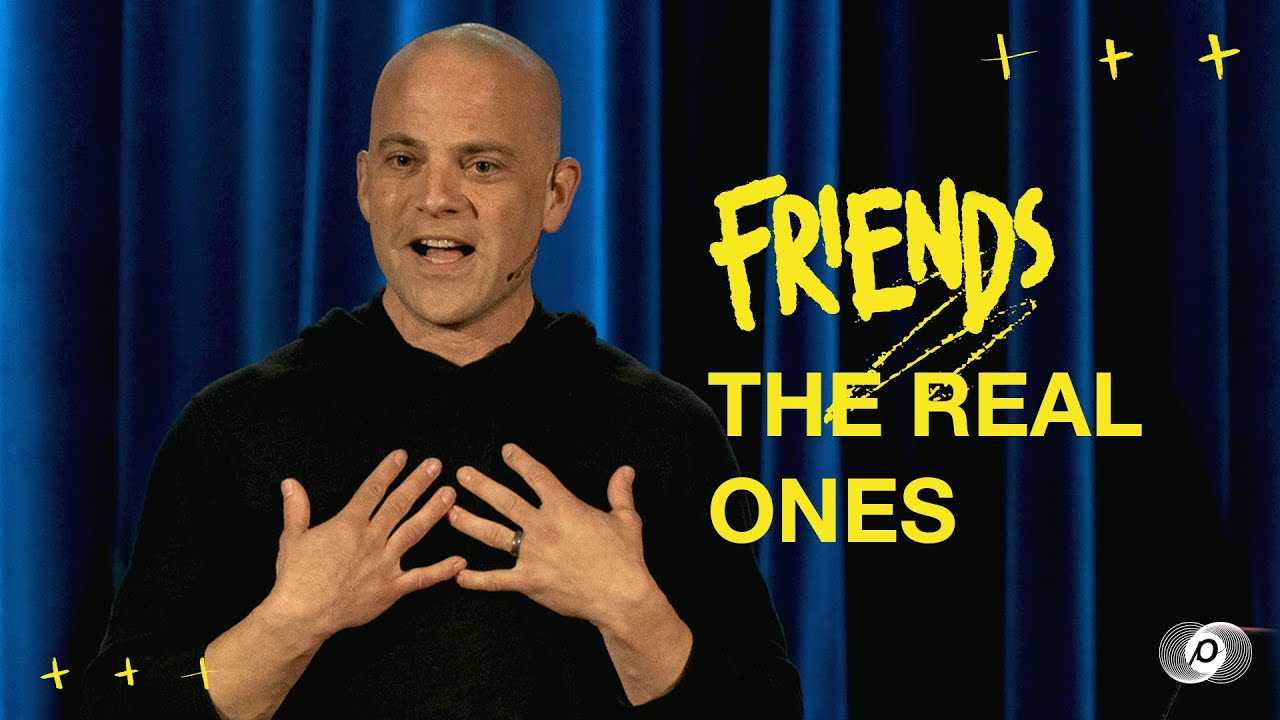
Friends: The Real Ones Sermon Analysis
Passion City Church DC
Quick verdict
This is a clear, pastorally useful sermon with a strong Christ-centered thesis and a memorable five-part framework on friendship. Its main limitations are proportion and some interpretive compression, especially where summary formulations move a bit beyond the explicit wording of the cited texts.
Speech summary
The speaker addresses the difficulty of forming lasting friendships, argues that friendship with God in Christ must come first, presents neighboring as the seedbed of friendship, and then outlines five marks of a true friend from Proverbs before calling listeners to concrete relational response.
Audience
churchgoing Christians seeking healthier friendships
The talk is aimed at listeners within a Christian context who feel the strain of modern isolation and want biblical guidance on friendship, neighboring, and community life shaped by Jesus.
Scores and reasoning
Depth
7.8 / 10The talk goes beyond surface encouragement by grounding friendship in theology, wisdom literature, moral formation, and community life. It is not higher because the exposition is more pastorally synthetic than textually rigorous in some places, and some sections prioritize illustration over deeper exegetical development.
Clarity
8.3 / 10The central line is understandable, the five-point framework is memorable, and listeners could likely outline the sermon after one hearing. It is not higher only because a few theological and interpretive compressions slightly reduce precision even while the overall message remains clear.
Structure
7.6 / 10The sermon has a clear controlling thesis, explicit transitions, and a conclusion that returns to the main idea. The score is moderated by the report's finding that the good-neighbor section takes enough space to delay the main five-point friendship framework and slightly compress the latter half.
Conviction
8.2 / 10The message consistently presses the audience toward self-examination and response, especially around inconvenience, honesty, friendship circles, and repentance. It earns a strong score because the challenge is sustained and specific without becoming merely accusatory.
Engagement
8.2 / 10The opening hook, humor, personal stories, and vivid illustrations sustain attention across most of the sermon. It earns a strong score because the engagement is consistent, though the extended middle setup before the five points slightly affects momentum rather than seriously diminishing it.
Practicality
7.4 / 10Listeners receive a usable framework, several concrete examples, and a few immediate next steps such as reaching out to someone or reconsidering an inner ring. The score remains in the good-not-exceptional range because application specificity is medium rather than high and does not become a fully repeatable method across all five traits.
Biblical Accuracy
7.4 / 10The sermon is broadly faithful, uses substantial Proverbs material, and keeps Christ central. The score stays below the strongest range because the report notes mixed text handling and a few interpretive compressions where summary claims are presented more directly than the cited texts themselves establish.
Evidence from the talk
the first friendship you need to get right is his
before we start talking about how to discern and how to be a good friend you have to start as proverbs does with how to discern and be a good neighbor
a true friend is constant
faithful are the wounds of a friend
if you're not willing to inconvenience yourself for someone else's advantage you're not a good friend
we are change agents in the culture because god has changed us
Strongest parts
The sermon establishes a clear controlling line from friendship with God to human friendship.
the first friendship you need to get right is his
It gives the talk a theological center and keeps the practical counsel from becoming merely relational self-help.
The opening recalls the prior week's claim about not forcing a 'god-size need' onto human relationships, and the close returns to Jesus as the true friend, which creates coherence across the sermon.
This line supports both the neighboring section and the five friendship traits by framing them as overflow from divine love rather than techniques for securing approval.
The sermon offers a memorable and navigable framework for discerning friendship.
a true friend is constant
The numbered sequence of constant, candid, counsel, confidant, and tact gives listeners an outline they can retain after one hearing.
Each point is tied to Proverbs material, explained in plain language, and reinforced with illustrations, so the audience can follow the progression without much effort.
The framework turns the broader neighboring ethic into a more focused test for close friendship.
The message applies pressure to the listener rather than staying at the level of description.
if you're not willing to inconvenience yourself for someone else's advantage you're not a good friend
It confronts self-protective patterns and calls for costly action, repentance, and relational reevaluation.
The sermon repeatedly moves from what friendship is to what the listener must do, including texting someone, changing an inner circle, and asking God for better friendships.
These moments make the sermon responsive rather than merely informative and tie the biblical material to concrete self-examination.
Weakest parts
Some interpretive moves move beyond what the cited texts clearly establish.
The sermon often handles Proverbs usefully, but at points it compresses broader biblical teaching into simplified definitions and builds a fair amount on lexical observation and synthesis.
Those moves do not overturn the message, but they slightly reduce textual precision by blurring the line between explicit wording, summary, and inference.
Listeners receive sound pastoral direction overall, but may come away thinking some sharpened formulations are direct biblical statements when they are partly interpretive.
- jesus clarified who is your neighbor he says anyone within your view that has a need
- the person with whom one is brought into contact and with whom one must live among
The neighboring section is substantial enough that the sermon's main friendship framework arrives relatively late.
The first half invests heavily in cultural setup, theology of friendship with God, and neighboring before reaching the promised five-point friendship structure.
The material remains relevant, but the proportion can make the center of gravity feel delayed and slightly compress the latter half.
Listeners stay oriented, yet some may feel the main practical framework comes after an extended runway.
- before we start talking about how to discern and how to be a good friend you have to start as proverbs does with how to discern and be a good neighbor
- let me move swiftly through five points
Application is concrete in spots but not consistently developed into repeatable practices across all five traits.
The sermon gives several usable examples and diagnostics, but many applications remain at the level of principle rather than a sustained method for how to build or test friendships over time.
Listeners are helped in self-examination, though some may still need to infer the step-by-step process for acting on the teaching.
The audience leaves with memorable categories and some immediate next moves, but not a fully developed practical system.
- maybe you need to text someone today and say hey i didn't know what to say so i said nothing
- i need a different inner ring
Current speech structure
Core thesis
Because human friendships cannot bear our deepest need for love, we must first receive friendship from God in Christ, then practice neighborly kindness and discern true friends by biblical marks drawn from Proverbs.
Opening hook
A cultural observation about American friendship, using the 'peaches and coconuts' analogy, sets up the problem of superficial and difficult-to-form friendships.
Cultural problem and felt need
StrongEstablish the contemporary relevance of the topic by naming loneliness, superficiality, and difficulty forming lasting friendships.
The opening is concrete, accessible, and directly connected to the sermon's subject.
Listeners quickly recognize the problem and are prepared to hear guidance on friendship.
The talk moves from cultural need to the prior sermon's theological foundation.
statistically speaking we are having a hard time today in america forging true and lasting friendships
Friendship with God as foundation
StrongArgue that human relationships fail when made to carry ultimate needs, and that Jesus offers the primary friendship that frees us to love others well.
This section states the controlling theological claim clearly and supports it with Jesus' sacrificial friendship.
The audience understands that the sermon is not merely about social technique but about reordered love.
The message then turns from theological foundation to Proverbs as wisdom for human relationships.
we need to get a friendship with god first
Why friendship selection matters
StrongShow that relationships shape character and therefore require wisdom and discernment.
The geode image, social examples, and Lewis quote all reinforce the claim that people around us shape us.
Listeners see why the topic deserves moral seriousness rather than casual preference.
This leads into the Old Testament wording and the move from neighbor to friend.
what you soak in will shape you whether you're beautiful or broken
From neighborliness to friendship
WeakArgue that Proverbs begins with being a good neighbor because that creates the environment in which friendship can grow.
The section is relevant and biblically motivated, but it occupies considerable space before the sermon reaches its main friendship framework.
Listeners still follow the line, but the main practical promise of the sermon is delayed.
After describing neighborly kindness, the speaker pivots explicitly to the five friendship traits.
Condense some of the neighboring illustrations so the later friendship framework has more room without losing the seedbed idea.
you have to start as proverbs does with how to discern and be a good neighbor
Five marks of a true friend
StrongProvide the sermon's main practical and diagnostic framework for evaluating and becoming a good friend.
The five points are clearly signposted, mostly well supported from Proverbs, and easy to remember.
Listeners can outline the sermon and assess their friendships with a workable grid.
The framework is then gathered back into Christ as the ultimate friend and into direct application.
let me move swiftly through five points
Christ-centered resolution and call to respond
StrongReturn the traits of friendship to Jesus' example and press the congregation toward repentance, action, and hope.
The conclusion resolves the sermon's main line by re-centering Jesus and then giving several concrete response options.
The ending feels pastorally directed and tied back to the core claim rather than merely stopping after the list.
It closes by envisioning a church and city reshaped by such friendships.
all of this is available to us in jesus because he is the true and ultimate friend
Re-Spined structure
Stronger opening hook
Most of us know the feeling: plenty of contact, not much closeness. The question is not just how to find better friends, but what kind of person the gospel makes us before friendship even starts.
Start with the friendship human beings cannot carry
Open with the central theological claim that our deepest need must be met in Christ, not in human approval.
This is the sermon's controlling thesis and gives the audience the right lens before any practical counsel.
Use the prior-week recap, Jesus' words about laying down his life for friends, and the language about love embraced becoming love extended.
Avoid a long front-end delay before the core claim is stated.
If you ask a human relationship to do what only Jesus can do, you will crush that relationship and still feel empty. The first friendship you need to get right is his.
Anchor the sermon in Christ before discussing friendship skills.
Why Proverbs treats friendship as a wisdom issue
Show that the people around us shape our character, so friendship requires discernment.
Once the theological foundation is in place, the audience needs to feel the moral weight of choosing and being friends wisely.
Use the geode illustration, the claim that those around us shape us, and the Lewis quote.
Avoid overextending lexical material as if it carries the main argument.
What you soak in will shape you. Your friends do not just keep you company; they help form your character.
Make the congregation feel why friendship is spiritually formative.
Before close friendship, practice neighborly love
Present neighborliness as the environment in which healthy friendships can grow.
This keeps the good-neighbor material while placing it more tightly under the larger friendship argument.
Use Leviticus 19:18, selected Proverbs on helping not harming, and one strong illustration such as the neighborhood gathering or the airplane moment.
Avoid stacking too many similar examples that lengthen the section without advancing the argument.
Proverbs does not let us skip to 'How do I get close friends?' It first asks, 'What kind of presence are you to the people already around you?'
Neighborliness is not a side topic; it is the soil where friendship grows.
Five marks of a true friend
Deliver the main diagnostic framework in a tighter, more central position.
This is the sermon's primary practical payload and should arrive earlier and with fuller room to breathe.
Keep the five points: constant, candid, counsel, confidant, and tact, along with the strongest supporting Proverbs and selected personal stories.
Avoid rushing the final traits or overexplaining weaker illustrations.
So what does a true friend look like? Proverbs gives us at least five marks, and each one tells you both who to look for and who you need to become.
Center the sermon on a memorable biblical framework.
Respond: repent, reach out, and re-order your circle
Turn the framework into explicit listener response.
After the audience has categories, they are ready for specific next steps.
Use the text-someone-today example, the warning about a descending circle, and the call to ask God for friends.
Avoid ending only with aspiration; keep the response concrete.
For some of you, the next act of obedience is a text. For others, it is admitting your inner ring is shaping you away from Christ.
Translate insight into immediate action.
End where the sermon began: Jesus the true friend
Resolve the sermon by showing that Jesus is both the model and source of all faithful friendship.
This gives the conclusion theological depth and closes the loop back to the controlling thesis.
Use the language about Christ stepping into our adversity, taking our shame, and creating a community of love.
Avoid introducing new categories or fresh illustrations this late.
You may say, 'I do not have a friend like that.' In the deepest sense, if you are in Christ, you do. And because you do, you can begin to become that kind of friend to others.
Finish with Christ as the source, not merely the example.
Analyze another talk