Public askSpeech analysis
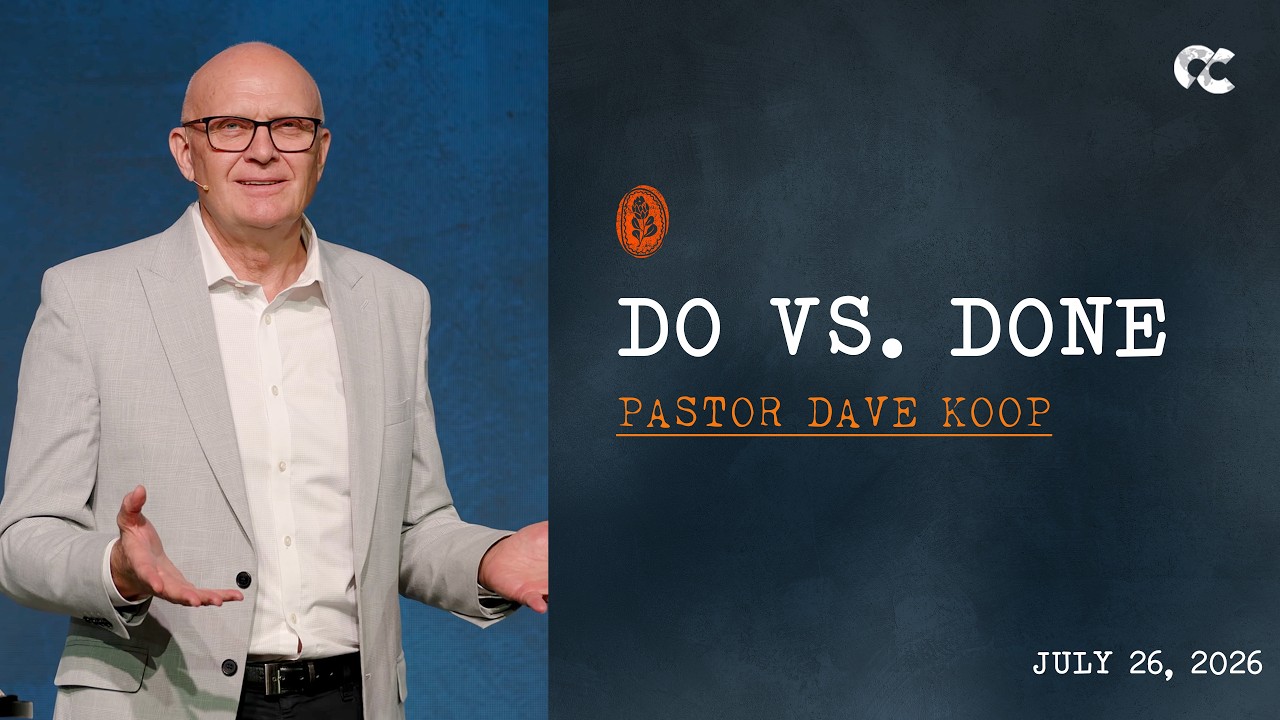
Do vs. Done Sermon Analysis
Coastal Church
Quick verdict
This is a clear, pastorally delivered Galatians sermon with a consistent grace-versus-performance thesis and a usable Spirit-guidance application. Its main textual argument remains intact, though a few broad theological claims need qualification and the middle application could be shorter to preserve the exposition’s momentum.
Speech summary
The speaker teaches from Galatians 3 that people are justified by faith in Christ rather than by works of the law. The sermon explains Paul’s appeal to the Galatians’ reception of the Spirit, Abraham’s faith, and the righteous living by faith, then applies the theme to Spirit-led Christian life and closes with communion and prayer.
Audience
evangelical church congregants
The message is aimed at Christians and spiritually interested attendees who may connect religious standing with performance, as well as people considering Christian faith and seeking assurance of acceptance by God.
Scores and reasoning
Depth
7.7 / 10The sermon explains justification, sanctification, Galatians’ historical conflict, Paul’s rhetorical questions, Abraham, Habakkuk, and Spirit-led life. It offers meaningful theological connections, though some developments move quickly from Paul’s argument to broader devotional claims.
Clarity
8.3 / 10Definitions of justification and sanctification, repeated contrasts between self-reliance and Spirit-reliance, and familiar illustrations make the message readily followable. A few compressed theological statements and repeated wording reduce precision.
Structure
8.2 / 10A clear opening thesis leads into Galatians 3, then develops three stated lines of support and closes in communion and prayer. The extended Galatians 5 and GPS material is relevant but takes more space than its role in the textual progression requires.
Conviction
8.6 / 10The speaker consistently and personally presses the central pastoral concern: listeners should stop treating God as someone they can obligate through performance and rely on the Holy Spirit.
Engagement
7.8 / 10The sermon sustains attention through questions, congregational responses, humor, biblical storytelling, and a contemporary driving illustration. The middle becomes somewhat repetitive as several illustrations restate the same contrast.
Practicality
8.0 / 10The GPS illustration gives listeners a concrete way to imagine Spirit-guided restraint, direction, and dependence. The final prayer also offers a direct response, although practical discernment is described more than specifically practiced.
Biblical Accuracy
7.6 / 10The central reading of Galatians—justification by faith and continued dependence on the Spirit rather than law-keeping—is substantially aligned with the passage. Some claims are stated more broadly than the immediate text establishes, and the Genesis 15:6 citation is referred to as “Galatians chapter 15:6.”
Evidence from the talk
Don't start in the spirit and then try to live this Christian life with your own strength and just grit it out.
The same spirit and the grace of God, his goodness, is going to empower you all the way through.
Faith is our spiritual DNA. We are of the family of faith.
Stay reliant and plugged into the Holy Spirit. Let him guide you and his pathways will lead you to peace.
Strongest parts
The sermon establishes a clear controlling contrast at the outset.
What the speaker said
The subtitle for the message is stop trying to earn what Jesus already finished.
It gives the congregation a concise interpretive lens for the exposition that follows.
The later discussion of Galatians 3, Abraham, the Spirit, and communion all returns to receiving rather than earning.
It allows each major section to function as support for the same central claim rather than as a separate topical lesson.
The explanation of Paul’s pastoral problem is accessible for listeners unfamiliar with Galatians.
What the speaker said
You came to God by believing of Christ did for you. By faith, you've been saved through grace. And that's how you live the rest of your life.
It translates the letter’s conflict over law and faith into a direct account of how believers begin and continue their Christian lives.
The speaker repeatedly contrasts receiving grace with trying to establish standing through performance.
This explanation prepares listeners to understand why Paul’s questions in Galatians 3 matter.
The GPS illustration turns Spirit-led living into an understandable everyday analogy.
What the speaker said
The Holy Spirit comes inside of us and he nudges us.
It presents guidance as restraint, warning, and direction rather than as an abstract theological phrase.
The speed-limit and route-guidance examples give the audience familiar categories for considering responsiveness to the Spirit.
It moves from the text’s warning against self-reliance to an applied question of how believers seek help in ordinary decisions.
Areas to strengthen
Several interpretive and theological claims need tighter qualification or correction.
The sermon’s main reading is sound, but it misidentifies the location of Abraham’s quotation and makes expansive doctrinal and comparative-religion claims without showing their textual basis or qualification.
Expository preaching gains authority when explicit textual claims, theological conclusions, and broad comparisons are carefully distinguished.
Listeners may retain the main grace-centered message while also receiving claims as direct conclusions of Galatians that require more nuance or support.
- We read in Galatians chapter 15:6, "Abra- Abram believed God and it was accredited to him as righteous."
- Nothing can can strip you away from that being part of my family.
- Every other religion is do, do, do, do and maybe you'll get good enough for God
The middle application section is relevant but somewhat overextended relative to the Galatians 3 exposition.
The sermon moves from explaining Paul’s questions into rhetorical technique, Galatians 5, Romans 8, fruit of the Spirit, and a detailed GPS analogy before returning to the Abraham argument.
Each element remains related to Spirit-led life, but the extended sequence delays the second and third textual witnesses that the speaker later identifies.
Most listeners can follow the theme, but some may experience the central Galatians 3 argument as paused rather than steadily developed.
- The app is also giving me directions.
- There's a lot of questions. Question after question after question.
Current speech structure
Core thesis
Believers are made right with God by faith in Christ and must continue their Christian life by reliance on the Holy Spirit rather than performance-based self-reliance.
Opening hook
Today, we're going to talk about do versus done.
State the grace-versus-performance thesis
StrongFrame the sermon around Christ’s completed work and identify the Galatian temptation to earn or preserve acceptance.
The thesis appears immediately and is repeated in language that remains central throughout the sermon.
Listeners know early that the message concerns receiving grace rather than attempting to earn God’s favor.
The speaker introduces Galatians as Paul’s response to teachers who added ceremonial requirements to faith in Christ.
Keep the decisive opening contrast, but qualify the broad comparison with all other religions or state it more narrowly as the issue Paul addresses in Galatians.
What the speaker said
Every other religion is “do, do, do, do,” and maybe you'll get good enough for God, but in Christianity, it's already done through Jesus and you need to live from that position.
Explain Galatians 3:1-5
StrongShow that the Galatians received the Spirit by hearing with faith, not by works of the law.
The sermon reads the passage, explains Paul’s questions, and consistently connects the text to the controlling thesis.
Listeners can see why Paul challenges a shift from faith to self-reliant effort.
The speaker moves from conversion by the Spirit to the question of how believers are guided by the Spirit in ongoing life.
Use one concise explanation of Paul’s rhetorical questions before moving to application.
What the speaker said
Having begun in the spirit, are you me being made perfect by the flesh?
Apply Spirit-reliance to Christian living
WeakDescribe sanctification as life empowered and guided by the Holy Spirit rather than by personal grit.
The application is relevant and understandable, but the extended move into later texts and the GPS illustration slows the stated three-witness progression in Galatians 3.
Listeners receive a practical image of guidance, though the textual line is temporarily less direct.
The speaker returns to Paul’s second witness, Abraham’s faith.
Retain the GPS analogy in abbreviated form after the Abraham and Habakkuk evidence, or explicitly mark it as a brief application pause.
What the speaker said
You can't do this without Jesus in you.
Use Abraham and Habakkuk as witnesses
StrongShow that Paul grounds justification by faith in the scriptural pattern of Abraham and the declaration that the righteous live by faith.
This section directly supports Paul’s argument that faith, rather than law observance, identifies God’s people.
Listeners receive a biblical continuity argument extending beyond their initial conversion experience.
The speaker shifts from the argument to communion as a remembrance of Christ’s completed work.
Correct the citation of Genesis 15:6 and distinguish the quoted Old Testament text from Paul’s use of it in Galatians.
What the speaker said
How are we right with God? It's always by faith, never by what we've done.
Call for response through communion and prayer
StrongInvite listeners to receive Christ’s work and ask for the Spirit’s help rather than striving for acceptance.
The conclusion returns directly to the opening claim and gives both seekers and believers a relevant response.
The congregation is invited to act on the sermon’s central distinction between receiving and earning.
The talk concludes in a prayer of faith.
Keep the prayer, while making clear that ongoing obedience is the fruit of grace rather than a condition for entering God’s family.
What the speaker said
Walk in the rhythms of my grace.
Analyze another talk