Public askSpeech analysis
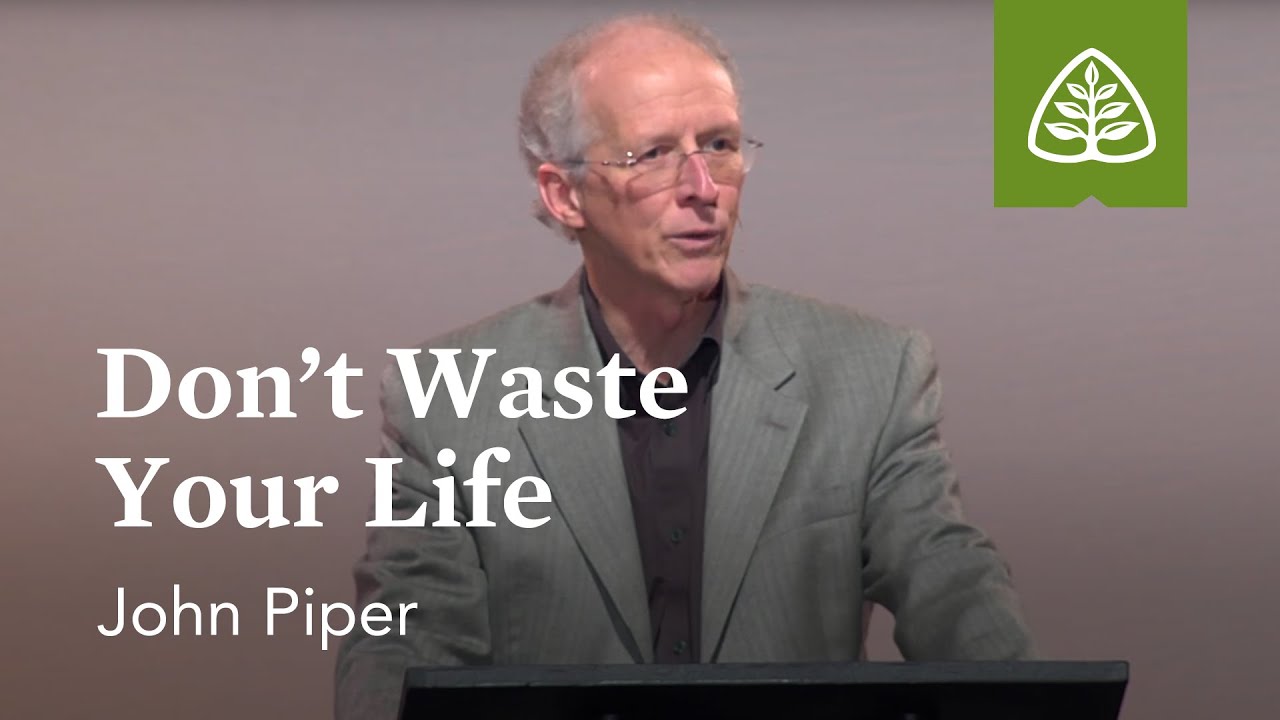
John Piper: Don't Waste Your Life Sermon Analysis
Ligonier Ministries
Quick verdict
This is a coherent theological vision-casting sermon with a clear controlling claim: an unwasted life treasures God in Christ and displays that treasure in joyful love under suffering. Its strongest material is the sustained God-centered framework and final Matthew 5 application. The argument would be more balanced and textually precise if major doctrinal syntheses were more clearly distinguished from what individual passages explicitly state.
Speech summary
The speaker recounts an early awakening to the seriousness of having one life before eternity and argues that people need a few great truths to govern their lives. He presents three discoveries: God’s purpose is to display His glory, Christ removes the sin and wrath that keep people from treasuring God, and joyful suffering in loving service most clearly displays Christ’s value. He concludes by urging listeners not to waste their lives but to find their supreme treasure in Jesus.
Audience
Christian conference attendees seeking a purposeful life
The address is aimed at spiritually interested Christians across ages, including younger adults and older listeners, who are being urged to orient their remaining life around God’s glory in Christ rather than personal achievement or distraction.
Scores and reasoning
Depth
8.2 / 10The three discoveries provide substantial theological development concerning God’s glory, Christ’s grace, sin, redemption, and suffering. The second and third discoveries are comparatively compressed, but the speech still offers more than a motivational call.
Clarity
7.7 / 10The main thesis, the three-part organization, and several memorable formulations make the core message understandable. At points, dense theological accumulation and rapid movement from texts to large conclusions can make the logic harder to follow.
Structure
7.6 / 10The opening, three discoveries, and conclusion form a recognizable progression, and the conclusion returns directly to the opening concern. The first discovery receives much more space than the later two, which weakens proportion even though the controlling thesis remains intact.
Conviction
8.3 / 10The message repeatedly confronts listeners with the weight of one life, calls them not to waste it, and culminates in a direct appeal to embrace Christ as supreme treasure. The pressure toward response is sustained and integrated with the theological argument.
Engagement
8.1 / 10The personal opening, recurring urgency of "one life," vivid language, audience-directed questions, and climactic appeal maintain connection across the talk. The long first theological section may test some listeners’ attention, but engagement is generally sustained.
Practicality
7.0 / 10For a theological vision-casting sermon, the speech gives a meaningful orientation toward joyful suffering, love, and treasuring Christ. It offers limited concrete guidance for practicing those commitments in ordinary relationships, work, church, or hardship.
Biblical Accuracy
7.0 / 10The address uses Scripture extensively and connects its central claims to several biblical passages, especially Exodus 3, Romans 9, Ephesians 1, and Matthew 5. However, broad conclusions about the purpose of the universe and particular texts are sometimes presented with greater certainty than the cited passages alone establish, making the handling mixed rather than tight.
Evidence from the talk
You have to be mastered by a few things, a few great things.
There is a great holy God, who means to be known truly and treasured duly.
The unwasted life is a life lived to show that Jesus is more precious than life.
The life that most clearly displays the all-satisfying worth and glory of God in Christ is a life of joyful suffering in the service of love.
Strongest parts
A controlling purpose frame is established early and carried through the three discoveries.
What the speaker said
If you want your life to count, if you want the ripple effect to go to eternity, then you want to give yourself to a few great things.
It defines the governing concern as a life that has enduring, eternal significance.
The later claims about God, Christ, and joyful suffering are repeatedly connected back to what makes a life "unwasted."
The personal opening becomes a theological argument and ends as an audience-facing appeal.
The talk offers a substantial theological synthesis centered on God’s glory, Christ’s redemption, and the believer’s response.
What the speaker said
God’s purpose was to display His glory. The apex of that glory is His grace. The apex of the display of grace is Jesus Christ.
It develops a layered account of divine purpose rather than merely calling listeners to try harder.
The central ideas are developed through recurring biblical references and are connected to the speech’s stated purpose.
Discovery one establishes God’s purpose, discovery two locates Christ at the center, and discovery three applies the vision to suffering and love.
The closing presses for a clear spiritual response without reducing the message to self-improvement.
What the speaker said
Then embrace Him and be so satisfied in Him that you live and die proving that He is your supreme treasure.
It calls listeners to treasure Christ and let that valuation shape their lives.
The appeal follows the message’s theological claims and gives the conclusion an identifiable response point.
The final plea gathers the prior themes of purpose, redemption, joy, suffering, and witness.
Weakest parts
Some major theological conclusions are asserted more strongly than the cited texts alone establish.
The speaker often moves from a text’s stated purpose or imagery to a comprehensive account of the universe’s purpose without consistently marking the move as theological synthesis.
The audience may have difficulty distinguishing direct textual claims from broader doctrinal inferences.
Listeners can receive a coherent vision, but may not see where interpretive certainty ends and synthesis begins.
- You couldn’t put a clearer point on the universe – Jesus Christ slain for sinners, the point of the universe
- surely that’s why He does everything from wrath, to power, to patience
The first discovery is proportionally much longer than the second and third discoveries.
The extended treatment of God’s self-existence, glory, and enjoyment delays the fuller development of Christ and joyful suffering.
The stated three-part design is clear, but its later components receive less explanatory space and practical development.
Listeners can retain the main first point strongly while experiencing the final two discoveries as comparatively compressed.
- That’s discovery number one. That would be enough for a lifetime.
- and these next two are shorter
Practical implications remain primarily aspirational rather than showing how listeners might embody joyful suffering and service in ordinary settings.
The talk gives a compelling spiritual orientation but few concrete practices, decisions, or examples for families, work, churches, or hardship.
Listeners are told what an unwasted life displays but receive limited help translating that vision into sustained action.
The conclusion can inspire reflection and resolve while leaving implementation largely to the listener.
- I want to so live and so die as to make Your glory look supremely valuable.
- If you are so satisfied in your reward that you really can keep doing good for people who hate you, happily, you’re off the charts salty.
Current speech structure
Core thesis
An unwasted life is one that treasures God’s glory in Christ above all else and displays that treasure through joyful suffering and loving service.
Opening hook
The speaker recalls, as a seventeen-year-old, awakening to the irreversible weight of having one life and then eternity.
One life and the search for purpose
StrongCreate urgency around life’s eternal outcome and establish the need for a durable purpose.
The personal story, poem, and repeated "one life" motif directly establish the speech’s central concern.
Listeners are invited to assess whether they are merely coasting or living toward an enduring end.
The urgency about one life becomes a claim that people need a few great truths that can master them.
What the speaker said
Don’t waste it. This is just all you’ve got and then the outcome.
Discovery one: God’s glory as life’s purpose
StrongArgue that God’s purpose in creation and redemption defines human purpose.
This is the most fully developed section and repeatedly links God’s glory to the question of an unwasted life.
Listeners receive a comprehensive God-centered account of why human purpose must be received rather than self-created.
Once God’s purpose is defined, the speaker identifies human sin and wrath as obstacles to joining that purpose.
Condense several repeated descriptions of divine self-existence and add clearer markers when moving from cited texts to theological synthesis.
What the speaker said
God’s design before my duty.
Discovery two: Christ removes the obstacle
WeakPresent Christ’s incarnate, crucified work as the means by which sinners can see and treasure God’s glory.
The section is relevant and theologically central, but it is shorter and makes several broad conclusions from a rapid series of texts.
Listeners can follow the Christ-centered turn, though the relationship among the cited passages and conclusions may feel compressed.
Christ’s saving work enables the kind of life that visibly values Him above comfort and safety.
Slow down around one or two key texts and distinguish what each passage explicitly says from the larger doctrinal synthesis.
What the speaker said
Between God’s purpose to be known and treasured and my treasuring Him is a massive obstacle of depravity and wrath.
Discovery three: joyful suffering in love
StrongShow that joy under persecution and continued good works display the value of God in Christ.
The Matthew 5 material gives the talk a concrete biblical image of the thesis and supplies an effective conclusion.
Listeners are pressed to see suffering, joy, and love as public testimony to Christ’s worth.
The exposition leads directly into the final plea not to waste one’s life.
Add one ordinary-life example of joyful suffering and loving service so the application extends beyond persecution imagery.
What the speaker said
The life that displays that most clearly is a life of happy suffering in the service of love.
Final plea
StrongReturn to the opening concern and call listeners to look to, embrace, and treasure Christ.
The ending explicitly resolves the original question of how not to waste one’s life.
The audience leaves with a concise spiritual response that fits the message’s theological argument.
What the speaker said
So I plead with you, don’t waste your life.
Re-Spined structure
Stronger opening hook
You have one life, and then its outcome for eternity. The question is not whether you will live for something, but whether what masters you will last.
The question of an unwasted life
Establish the personal and eternal stakes without lingering too long in the autobiographical opening.
It gives listeners the governing question before the theological argument begins.
Use the "one life" language, the poem’s final verse, and the call not to coast through life.
Avoid extended repetition of mortality imagery before the thesis is named.
You have one life, and then eternity. So what kind of life will not be wasted?
Open with the irreversible weight of one life and state the central question.
God defines the purpose we cannot invent
State that God’s glory is the governing purpose of creation and that human purpose follows God’s design.
The answer to a purposeful life begins with God rather than self-selected ambition.
Use Exodus 3:14, the concise formulation that God is to be known truly and treasured duly, and the phrase "God’s design before my duty."
Avoid treating every later doctrinal conclusion as equally explicit in each cited text.
Before we ask what we should do with our lives, we must ask what God is doing in His world.
God’s self-revelation establishes the purpose by which an unwasted life is measured.
Christ brings sinners into that purpose
Explain that sin and wrath prevent people from treasuring God, and that Christ’s saving work opens the way.
It prevents the God-centered vision from becoming a demand that listeners attempt in their own strength.
Use Ephesians 1, 2 Timothy 1:9, and the summary that Christ covers and conquers the obstacles of depravity and wrath.
Avoid building the section around the claim that Revelation 13:8 alone makes the cross "the point of the universe." Present that as synthesis if retained.
The God whose glory defines our purpose has not left sinners unable to share in it; He has acted in Christ.
Christ’s grace removes the barrier between God’s purpose and the believer’s joyful participation in it.
What this life looks like
Show how satisfaction in Christ becomes visible through joy under suffering and continued love toward others.
It converts the theological vision into the speech’s clearest audience-facing pattern of life.
Use Matthew 5:11–16, the reward of seeing Christ’s glory, and the language of doing good for those who hate you.
Avoid leaving the application only at the level of persecution; add ordinary settings of costly love if available.
When Christ is your treasure, suffering need not have the final word, and love can continue even when it costs you.
Joyful endurance and active love make Christ’s worth visible.
The final response
Return to the opening question and give listeners a concise response: look to Christ, treasure Him, and live accordingly.
It resolves the argument with the same eternal stakes that opened the talk.
Use the final plea, "Look to Jesus," and the call to live and die proving that He is supreme treasure.
Avoid adding a new theological claim at the close.
Don’t waste your life. Look to Jesus, receive Him as your treasure, and let your life show what you value most.
Close by joining the eternal urgency of the opening to the Christ-centered response of the whole message.
Analyze another talk