Public askSpeech analysis
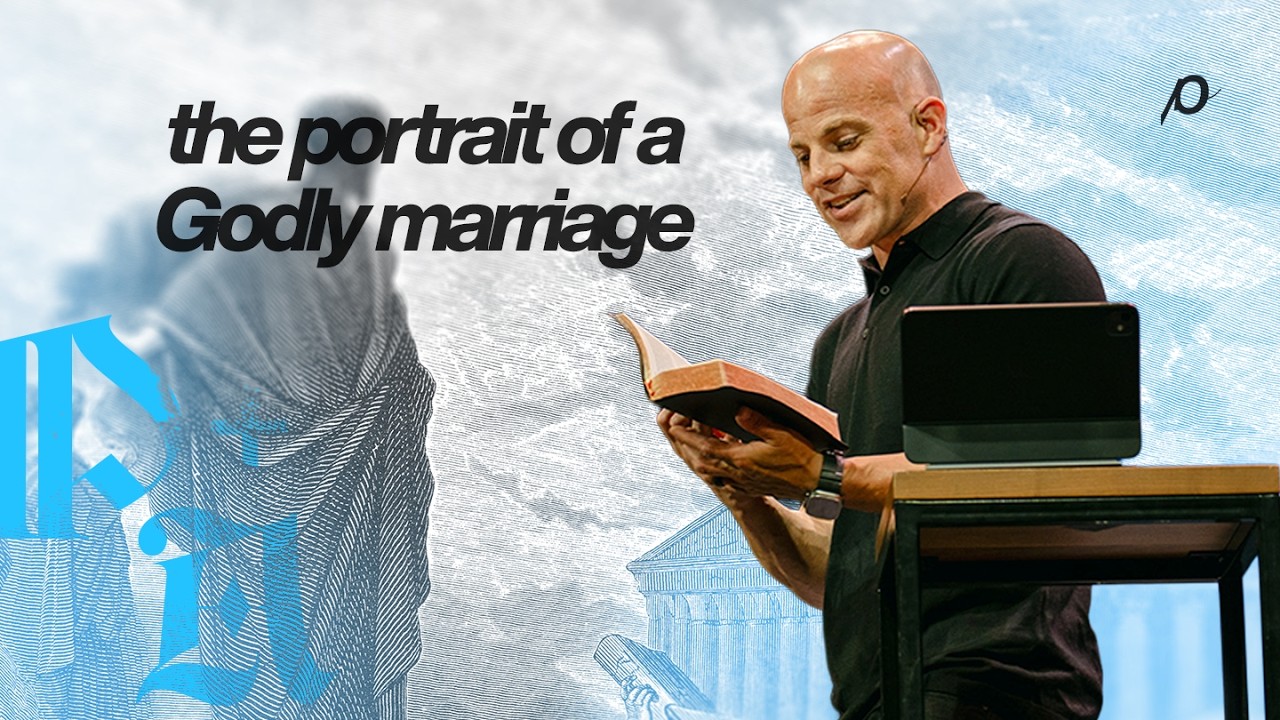
The Portrait of a Godly Marriage | Acts 18 Sermon Analysis
Passion City Church DC
Quick verdict
This is an engaging, conviction-led vision-casting sermon with a clear three-part framework and concrete applications. Its strongest material comes from Acts 18 and the gospel-centered close. The main editorial need is to distinguish textual fact from plausible inference and reduce some illustrative accumulation in the middle.
Speech summary
The speaker uses Priscilla and Aquila’s ministry in Acts and Paul’s later references to them to describe a marriage on mission. The sermon presents them as hospitable, available, and faithful, applies those traits to homes and ordinary service, and concludes by grounding Christian mission in Jesus Christ.
Audience
Christian adults, especially single and married congregants
The sermon addresses church listeners who are considering marriage, living within marriage, or seeking to orient ordinary work, homes, and relationships around Christian service.
Scores and reasoning
Depth
7.7 / 10It connects Acts, Genesis, 1 Peter, and Pauline greetings into a substantive theology of shared mission, though some interpretive observations receive less textual qualification than they need.
Clarity
8.2 / 10The controlling idea and recurring language are clear, and direct questions make application understandable; some extended anecdotes and speculative details temporarily blur the main textual line.
Structure
7.8 / 10The three-part progression of hospitable, available, and faithful gives the sermon a usable frame, although the volume of supporting stories and historical asides stretches the middle sections.
Conviction
9.2 / 10The speaker consistently communicates personal commitment to Christ, hospitality, service, and mission without sounding detached from the appeals being made.
Engagement
8.8 / 10The opening story, humor, personal narratives, direct address, and final Narnia image sustain attention across most of the sermon.
Practicality
8.3 / 10Listeners receive specific invitations to host, include newcomers, serve, pray for leaders, and regard ordinary spaces as places of ministry.
Biblical Accuracy
7.3 / 10The sermon follows the broad biblical sequence for Priscilla and Aquila and handles Apollos's correction responsibly, but several historical dates, causal claims, and implications are stated more firmly than the text itself establishes.
Evidence from the talk
I want to show you and hopefully give you a vision of what a marriage on mission might look like.
No, we're not just asking Jesus to bless our tent business. Our tent business is for Jesus.
Let's do hard things that matter with people we love.
Marriage is at its best when it's on mission together.
Strongest parts
The sermon establishes a memorable controlling image before turning to the biblical couple.
What the speaker said
The spotlight does not always shine where the real action is.
It frames Priscilla and Aquila as influential servants whose public visibility was limited.
The image gives listeners a simple interpretive lens for the later biblical material.
It moves from unseen influence in music and history to faithful influence in the church.
The three descriptors create a clear application framework.
What the speaker said
They were hospitable.
It names the first characteristic and is later followed by availability and faithfulness.
Repeated labels help listeners retain the sermon’s central applications.
Each label is connected to an episode or reference involving Priscilla and Aquila.
The treatment of Apollos highlights truth joined to restraint and restoration.
What the speaker said
They took him aside and explained to him the way of God more accurately.
It grounds the availability section in Acts 18:26 rather than merely urging listeners to be helpful.
The speaker contrasts private correction with public shaming and draws a practical pastoral implication.
It presents the couple as participants in a redemptive response to theological incompleteness.
Areas to strengthen
Several historical and textual inferences are presented with more certainty than the passages support.
The sermon moves from plausible background or implication to asserted fact without consistently distinguishing the biblical text, historical reconstruction, and rhetorical inference.
Listeners may remember these claims as explicit biblical information, even where the transcript does not establish them.
The main pastoral point remains understandable, but careful listeners may be uncertain which details are directly stated in Scripture.
- He was a tent maker because he worked for Priscilla and Aquilla, right?
- which was in many ways uh partially bankrolled by Priscilla and Aquilla.
- 1 and 2 Corinthians and Ephesians and Romans were all stamped with the address of their house.
The middle sections are application-rich but somewhat overextended by accumulated anecdotes and side explanations.
Multiple personal stories reinforce the same broad point about availability and hospitality, while historical comments about names, dates, and locations add further length.
The three-part structure remains visible, but the Acts-based development receives less proportional attention than the illustrative material.
Listeners are likely to stay engaged, yet may retain selected stories more readily than the textual progression through Priscilla and Aquila’s ministry.
- I had never had a youth pastor. I didn't know what a youth pastor did.
- And so Ryan and a group of guys said, "You know what?
- And so I kind of worked up the courage uh to go as this young man to Jack and Sammy Walker
Current speech structure
Core thesis
Marriage, and more broadly every Christian life, is at its best when it is joined to Christ’s mission through hospitality, availability, and faithfulness.
Opening hook
The story of Jimmy Oine introduces the idea that unseen people can shape history more than those in the spotlight.
Unseen influence and the vision of marriage on mission
StrongTo establish that God often works through people who are not publicly prominent and to introduce Priscilla and Aquila as an example.
The opening image directly prepares the audience for the biblical couple and the sermon’s mission-oriented thesis.
Listeners receive an accessible reason to care about relatively unfamiliar biblical figures.
The speaker moves from the value of unseen influence to why a shared cause matters in marriage.
Shorten the music-industry biography slightly so the controlling principle arrives sooner.
What the speaker said
They are the ultimate guys behind the guys.
Why shared mission strengthens marriage
StrongTo argue that belonging and mattering are linked and that marriage needs a common direction.
The section gives a conceptual basis for the later exposition and explicitly includes unmarried listeners.
Singles and married listeners can understand why the theme is relevant before the sermon turns fully to Acts.
Genesis and the stated three points lead into Priscilla and Aquila’s story.
State more clearly that the Genesis application is a theological synthesis rather than a direct description of Priscilla and Aquila.
What the speaker said
We're meant to link hands and run together in a common mission.
Hospitable: using home and work for ministry
StrongTo draw hospitality and vocational stewardship from Acts 18 and apply them to homes, meals, and church inclusion.
The section is textually connected to Paul staying and working with the couple, and its applications are concrete.
Listeners can identify ordinary resources they might offer to others.
The couple’s movement with Paul and later encounter with Apollos introduces availability.
Avoid stating that Paul definitively worked for the couple; say that they shared a trade and worked together.
What the speaker said
We want our business, our home, our life to be leveraged for the greatest of all causes.
Available: responding redemptively to needs
StrongTo show that Priscilla and Aquila helped Apollos rather than withdrawing, shaming him, or waiting for someone else.
Acts 18:26 supports the central example, and the speaker’s contrast with public condemnation sharpens the pastoral application.
Listeners are invited to see themselves as participants in solutions within their communities.
The later references to the couple’s house churches and enduring service introduce faithfulness.
Use one major contemporary illustration rather than several, preserving more time for the biblical episode.
What the speaker said
What's the most redemptive course of action I can take? I'm going to take that.
Faithful: enduring service across places and generations
WeakTo trace Priscilla and Aquila through later Pauline references and call listeners to lifelong service.
The recurring references do support their continuing ministry, but the section includes unverified explanations about name order, wealth, addresses, and unnamed risks.
The call to durable faithfulness is clear, though some supporting details may be difficult to separate from the explicit text.
The speaker shifts from their example to Christ as the source and model of mission.
Anchor the section in the explicit references—church in their house, fellow workers, and greetings in 2 Timothy—while labeling other proposals as possibilities.
What the speaker said
Greet Prrisca and Aquilla, my fellow workers in Christ Jesus, who risked their necks for my life
Gospel-grounded closing appeal
StrongTo call listeners, especially singles, to follow Christ now and to understand mission as flowing from grace.
The conclusion returns to the central thesis, broadens the relevance beyond marriage, and centers Jesus rather than personal aspiration.
Listeners are left with a direct invitation to orient their lives around Christ’s grace and mission.
The sermon ends with a personal question about knowing Jesus.
Condense the final Narnia quotation enough to leave more space for the final gospel invitation.
What the speaker said
All of our hope is where Priscilla and Aquilla's hope is.
Re-Spined structure
Stronger opening hook
Some of the people who shape history never stand in the spotlight. Priscilla and Aquila are proof that an ordinary home, ordinary work, and ordinary faithfulness can serve an extraordinary mission.
A Life on Mission Before a Marriage on Mission
To establish that following Christ is the primary calling for every listener, whether single or married.
Starting with shared Christian mission prevents unmarried listeners from hearing the sermon as relevant only to couples.
Use the spotlight principle, the Abraham and Bethlehem contrast, and the line about belonging and mattering.
Avoid a lengthy retelling of the recording-industry biography before naming the sermon’s central claim.
Before you ask who you might marry, settle where your life is going: I am chasing Jesus.
Every Christian is called to Christ’s mission; marriage can become a shared expression of that calling.
Hospitable: Let What You Have Serve the Mission
To show how Priscilla and Aquila’s home, trade, and relationship with Paul illustrate open-handed participation in ministry.
This is the first clear episode in the Acts narrative and provides the most immediate concrete application.
Use Paul meeting them in Corinth, their shared trade, Paul staying with them, 1 Peter 4, and one concise story of being welcomed into a home.
Avoid saying Paul definitively worked for them or that the Corinthian church was bankrolled by them unless framed as inference.
You may not have a platform, but you may have a table, a living room, a meal, a skill, or an open hour. Ask God how that can serve someone else.
Hospitality turns ordinary possessions and spaces into places where people can encounter Christian community.
Available: Become Part of the Redemptive Response
To show how the couple privately and constructively helped Apollos understand the way of God more accurately.
The Apollos episode gives the sermon its clearest example of truth, love, initiative, and ministry beyond formal leadership.
Use the contrast with public shaming, the phrase about the most redemptive course of action, and one shortened Ryan illustration.
Avoid multiplying examples that make the point without advancing the textual argument.
When you see a need, do not begin with, Somebody should do something. Begin with, Lord, what faithful and loving action can I take?
Availability means responding to nearby needs with truth, love, and constructive initiative.
Faithful: Keep Serving Across Seasons
To show the couple’s enduring presence in churches and Paul’s continued recognition of them.
After hospitality and availability, the later references demonstrate that their service was not limited to one moment or city.
Use the explicit phrases about the church in their house, fellow workers, risking their necks, and Paul’s greeting in 2 Timothy, followed by the Jack and Sammy story.
Avoid treating the changing name order, exact dates, house addresses, wealth, or the circumstances of risking their necks as settled facts.
Faithfulness is not one dramatic yes. It is a long series of ordinary yeses: here we are, Lord; use us again.
Priscilla and Aquila model sustained service that outlasts changing locations, roles, and generations.
Christ Is the Source of the Mission
To ground the call to mission in Christ’s grace, death, resurrection, and faithful presence.
The sermon should end not with an idealized picture of marriage but with the King whom believers follow.
Use the final Narnia image in abbreviated form, the declaration that Christ lived, died, and rose for the listener, and the closing question.
Avoid allowing the personal marriage testimony or literary quotation to carry more weight than the gospel invitation.
The question is not first, Will I find the right person? The first question is, Do I belong to Jesus, and will I follow him wherever he leads?
Christian mission begins with belonging to Jesus and continues through faithful obedience in every season.
Analyze another talk