Public askSpeech analysis
Spiritual Gifts (1): Administration, Mercy, Service, Giving Sermon Analysis
Centre Church
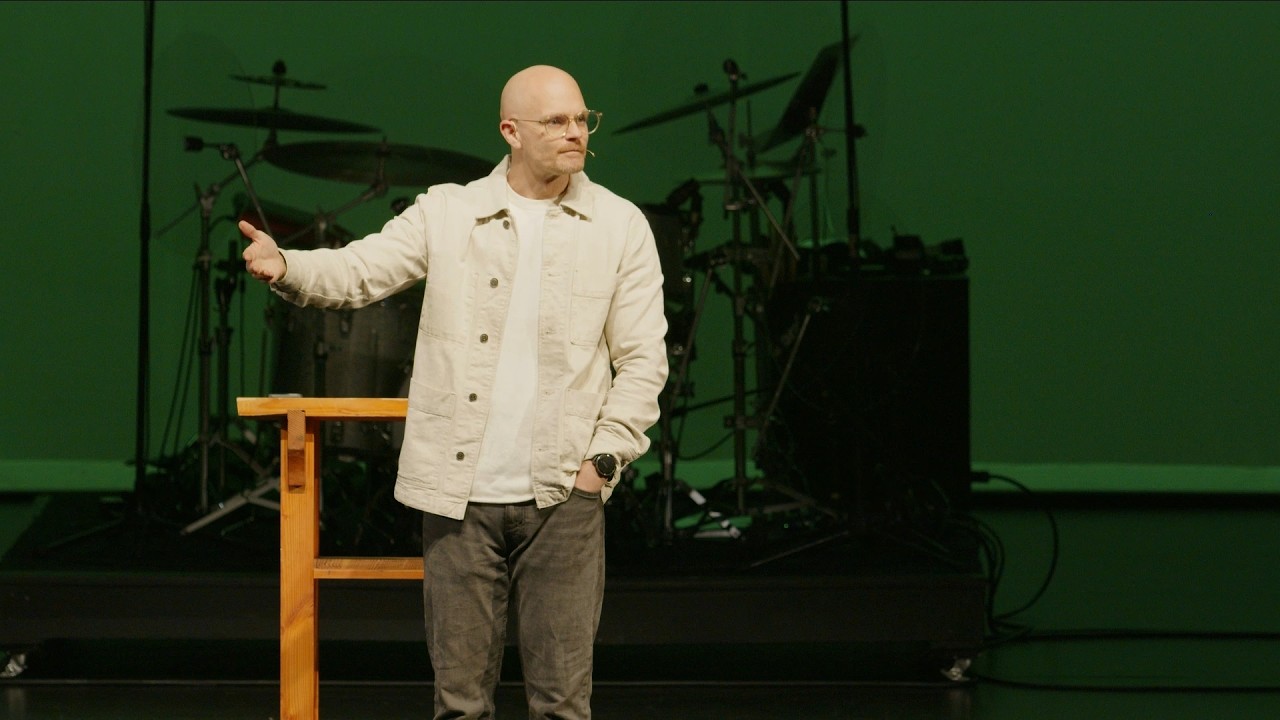
Speech summary
The speaker preaches from 1 Corinthians 12 on spiritual gifts, calling the church to surrender to Jesus, understand that every believer has Spirit-given gifts for the common good, earnestly desire those gifts, and begin discerning gifts such as administration, mercy, service, and giving before praying together and taking communion.
Audience
Christians within a charismatic or continuationist church context who are already open to the Holy Spirit’s gifts and congregational prayer ministry.
The sermon appears aimed at an established local church entering a short teaching series on spiritual gifts, with gospel communities expected to discuss the material further.
Scores and reasoning
Depth
7.4 / 10The talk gives more than a surface-level treatment: it defines gifts, distinguishes natural abilities from Spirit-given capacities, names dangers and shadow sides, and situates gifts in the life of the local church. Its depth is limited by the very large amount of material covered at speed and by moving across many texts without always slowing down to interpret them carefully.
Clarity
7.3 / 10Many individual explanations are clear and memorable, especially the snowblower analogy and the practical signs of each gift. Clarity is weakened by verbal clutter, repeated starts, occasional citation confusion, and the sheer number of ideas packed into one message.
Structure
6.5 / 10There is a recognizable plan: surrender, biblical groundwork, eight principles, four gifts, prayer, communion. But the sermon is overloaded, with long setup, many numbered points, multiple cross-references, humor, prayer, application, and extended illustrations. The audience could remember the emotional thrust more easily than the outline.
Conviction
8.8 / 10This is the strongest quality of the sermon. The speaker sounds personally burdened, spiritually urgent, and willing to press the congregation toward surrender, repentance, and participation. The intensity generally serves the message, though at moments it risks becoming rhetorically forceful beyond what has been carefully demonstrated.
Engagement
8.3 / 10The speaker uses vivid metaphors, humor, direct address, call-and-response, and physical participation. The congregation is clearly being led, not merely lectured. The length and density may fatigue some listeners, but the live-room engagement is strong.
Practicality
8.1 / 10The sermon is unusually practical for this subject. It gives signs that listeners may have specific gifts, warns about misuse, directs gospel communities to discuss the material, and leads the congregation into immediate prayer. The main limitation is that the practical framework is abundant but somewhat scattered.
Biblical Accuracy
7.2 / 10The sermon is broadly faithful to a continuationist reading of 1 Corinthians 12 and keeps the gifts oriented toward Jesus, surrender, and the common good. However, it sometimes handles supporting texts loosely, including a likely mistaken citation of Acts 1:8 as Acts 18, a speculative use of Matthew 25 as a direct warning about spiritual gifts, and some under-supported eschatological urgency.
Evidence from the talk
Here are some signs you may have this gift.
To each is given the manifestation of the spirit for the common good.
If you if you feel that you have one of these gifts, administration, mercy, service, giving, you feel you have one of these gifts or you want one of these gifts.
there's there's there's eight things I need to say to you about spiritual gifts before we can look at some specific gifts today.
Some of us have deconstructed our thrones.
Strongest parts
The sermon has a compelling controlling burden around surrender.
It frames spiritual gifts as discipleship rather than self-expression.
The line is direct, memorable, and theologically central to the sermon’s purpose.
It prepares the audience to hear the later teaching on gifts as a call to obedience and service.
The speaker makes a difficult distinction accessible through a strong analogy.
It explains how all Christians share certain duties while some are specially gifted for them.
The metaphor is ordinary, visual, and easy to transfer to multiple gifts.
It becomes a repeated framework for mercy, service, giving, and administration.
The sermon moves into actual congregational practice rather than staying theoretical.
It turns the doctrine into a communal act of prayer and response.
The sermon’s stated aim is not merely information but discernment and participation.
It gives listeners an immediate next step and reinforces the church-wide nature of the message.
Weakest parts
The sermon is overstuffed for one sitting.
The message attempts to cover a full theological introduction plus several specific gift profiles and an extended ministry response.
Too many units compete for attention, so the congregation may retain the emotion but lose the architecture.
Listeners may feel inspired but struggle to explain the main argument afterward.
Some biblical support is loose or imprecise.
A likely wrong citation and speculative cross-text applications are delivered with strong confidence.
The authority of the sermon depends on clear distinction between what the text says and what the preacher is applying pastorally.
Biblically attentive listeners may trust the central message but hesitate over some of the supporting claims.
A few illustrations and asides distract from the sermon’s focus.
Humor and anecdotal detail sometimes pull attention away from the theological and pastoral line.
The sermon already carries a heavy load, so side comments make the message feel longer and less controlled.
Some listeners may enjoy the personality but miss the main point of the section.
Current speech structure
Core thesis
The Holy Spirit gives gifts to every believer for the common good, and the church must surrender to Jesus, discern those gifts, and use them to build up the body.
Opening hook
The opening image of surrender and discarded thrones frames the entire sermon as a confrontation with self-rule.
Call to surrender under the word
StrongPrepare the congregation spiritually before hearing and responding to Scripture.
It is vivid, urgent, and tightly connected to the sermon’s later warnings about pride in spiritual gifts.
Listeners are emotionally and spiritually positioned to receive correction.
The Scripture reading becomes not just information but an act of submission.
Keep this section, but shorten a few asides so the opening lands more cleanly.
Biblical groundwork for gifts
DriftEstablish that spiritual gifts are biblical, Spirit-given, and intended for the church’s good.
The eight points are relevant but too numerous and unevenly developed.
The audience receives a lot of useful content but may not know which points are most important.
The groundwork leads into the specific gifts, but the sermon takes a long time to arrive there.
Reduce the eight points to three controlling claims: gifts come from the Spirit, gifts serve the body, and gifts require surrender.
Gift categories and definitions
StrongGive listeners a map for understanding love, word, and power gifts.
The speaker clearly admits the categories are not biblical categories while using them as a practical teaching aid.
Listeners receive a workable mental framework without being misled about its authority.
The categories prepare the audience for the four love gifts discussed that day.
Keep the disclaimer but state the day’s scope sooner.
Four love gifts
StrongExplain administration, mercy, service, and giving with signs and dangers.
This is the most useful teaching portion because it combines definition, recognition, warning, and encouragement.
Listeners can begin to locate themselves and others in the body.
The gift profiles naturally lead to prayer for release and discernment.
Shorten the giving anecdote and give each gift a consistent structure.
Prayer and communion response
StrongMove the congregation from hearing to embodied surrender and intercession.
It fits the sermon’s thesis and gives the church a concrete act of obedience.
Listeners are invited to participate rather than merely agree.
Communion returns the focus to Jesus as the source and center of the gifts.
Give slightly clearer instructions before people begin moving.
Analyze another talk