Public askSpeech analysis
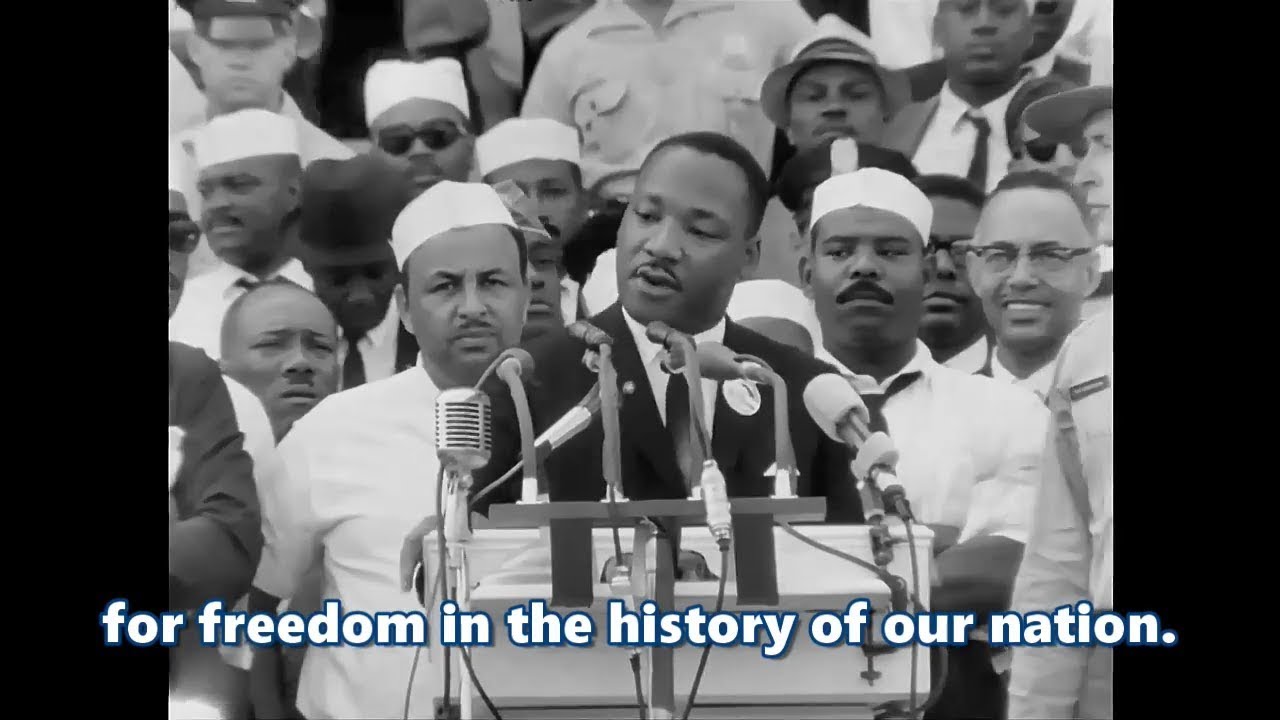
I Have a Dream speech by Martin Luther King .Jr HD (subtitled) Political Speech Analysis
RARE FACTS
Quick verdict
This is a tightly unified civic persuasion speech that moves from national promise, to present injustice, to vivid public hope, to collective resolve. In the provided transcript, some argumentative connective tissue is compressed, but the speech's core line, emotional force, and ending remain unusually clear.
Speech summary
The speech argues that the United States has not fulfilled its promise of freedom for Black citizens. It recounts the unfinished legacy of emancipation, describes ongoing injustice, imagines a future of racial equality and brotherhood, and closes with a call for shared action and nationwide freedom.
Audience
national public at a civil rights demonstration
The speech addresses a mass public audience that includes supporters, skeptics, media, and political leaders. Its subject is relevant because it argues that racial equality is a national democratic obligation, not only a concern for one group.
Scores and reasoning
Depth
8.5 / 10The speech has substantial moral and civic substance, grounding its appeal in history, injustice, and a developed vision of social change. In this transcript version, some of the rationale between diagnosis and action is compressed, so the depth is strong but not maximal.
Clarity
9.3 / 10The central claim is stated early, sustained throughout, and resolved in the conclusion. The only notable limit in the provided transcript is some compressed connective material between major movements.
Structure
9.5 / 10The Current Spine is highly coherent: historic frame, present injustice, dream vision, then collective resolve. Sections are tightly integrated, transitions are evident, and the ending clearly returns to the main idea.
Engagement
9.8 / 10Engagement is sustained across the full speech through repetition, imagery, escalation, and a strong closing rhythm. The report identifies no major dead zone or detour that breaks audience connection.
Credibility
9.2 / 10The speech builds authority through national history, shared civic ideals, and a consistent alignment between its diagnosis and call. Text handling is marked mixed only because the transcripted version compresses some connective material, not because the central claims feel unreliable.
Originality
9.4 / 10The report shows a distinctive fusion of historical framing, repeated dream imagery, religious cadence, and national geography. Its moral vision is rendered in memorable language rather than generic campaign phrasing.
Actionability
7.8 / 10The speech effectively moves listeners toward solidarity and public commitment, especially through lines about working, struggling, and standing together. It is less specific on policy or concrete next-step detail, which keeps the score below the top tier.
Evidence from the talk
but 100 years later the Negro still is not free
I have a dream that one day my little children will one day live in a nation where they will not be judged by the color of their skin but by the content of their character
with this faith we will be able to transform the jangling discords of our nation into a beautiful symphony of brotherhood
let freedom ring from every Hill from every state and every city
we will be able to work together to pray together to struggle together to go to jail together to stand up for freedom together
all of God's children black men and white men Jews and Gentiles Protestants and Catholics will be able to join hands
Strongest parts
The speech states the injustice plainly, then keeps returning to that claim through each major movement.
What the speaker said
but 100 years later the Negro still is not free
This line crystallizes the central problem after the historical opening and gives the rest of the speech a clear argumentative anchor.
The audience can track the talk as a response to one unresolved national failure rather than as a loose collection of appeals.
Later dream, faith, and freedom-ring sections all function as expansions of what it would mean to correct that condition.
The repeated dream language turns an abstract political claim into vivid, memorable public images.
What the speaker said
I have a dream that one day even the state of Mississippi a state sweltering with the heat of injustice sweltering with the heat of oppression be transformed into an oasis of freedom and justice
It translates equality into concrete scenes, places, and relationships listeners can picture.
The imagery and repetition make the moral vision emotionally legible to a broad audience with mixed viewpoints.
This section widens the speech from grievance to national aspiration, preparing the later collective call.
The closing call converts hope into shared civic and moral participation.
What the speaker said
we will be able to work together to pray together to struggle together to go to jail together to stand up for freedom together
It gives listeners a collective response pattern rather than leaving the speech at the level of sentiment.
The verbs are public and participatory, fitting a mass-movement speech whose purpose is solidarity and sustained action.
It bridges the dream section to the final national chorus of freedom, making the ending feel earned rather than decorative.
Areas to strengthen
The submitted transcript omits some connective material, which makes one part of the progression feel compressed rather than fully developed on the page.
The move from diagnosis to dream to collective action is still traceable, but the middle rationale appears abbreviated in this version.
That compression slightly reduces how fully the speech's political argument is articulated in the transcript as provided.
A listener still gets the thrust, but some of the argumentative bridge reads as more implied than spelled out.
- but 100 years later the Negro still is not free
- I have a dream
- with this faith we will be able to work together to pray together to struggle together
Some universal religious and patriotic language broadens the coalition effectively, but it can also soften policy specificity.
The speech strongly names moral direction and collective stance, yet it offers limited concrete next-step detail beyond solidarity and struggle.
For listeners looking for specific policy or legislative asks, the response pathway remains general.
The audience is moved toward commitment, but not toward a detailed checklist of action.
- with this faith we will be able to transform the jangling discords of our nation into a beautiful symphony of brotherhood
- let freedom ring from every Hill from every state and every city
Current speech structure
Core thesis
America has failed to fulfill its promise of freedom and equality for Black citizens, and the nation must realize that promise through shared moral commitment and public action.
Opening hook
The speech opens by placing the moment in national history and invoking the Emancipation Proclamation as an unfulfilled landmark.
Historic frame and broken promise
StrongConnect the demonstration to the nation's founding ideals and establish that emancipation remains incomplete.
The opening is relevant, intelligible, and quickly leads to the core claim of unfinished freedom.
Listeners understand that the speech is about a national promise still denied in practice.
After naming the promise, the speech turns to the present reality of segregation and poverty.
What the speaker said
Five score years ago a great American in whose symbolic shadow we stand today signed the Emancipation Proclamation
Present injustice
StrongDefine the current condition with repeated evidence of ongoing racial oppression.
This section is direct, memorable, and central to the thesis.
The audience is given a clear reason the gathering matters now, not merely historically.
Having established the wrong, the speech moves into its positive vision of what justice would look like.
What the speaker said
one hundred years later the life of the Negro is still sadly crippled by the manacles of segregation and the chains of discrimination
Dream vision
StrongProvide vivid images of racial justice, reconciliation, and civic equality.
The repeated dream refrain gives coherence and emotional force while staying aligned with the thesis.
Listeners can picture the desired future rather than hearing only condemnation of the present.
The speech then shifts from vision to the faith and solidarity required to pursue that future.
What the speaker said
I have a dream that one day my little children will one day live in a nation where they will not be judged by the color of their skin but by the content of their character
Faith, solidarity, and national call
StrongConvert the vision into collective resolve and end with an inclusive call for freedom across the nation.
The section meaningfully advances the thesis by linking hope to action and then to a national chorus.
The ending feels cumulative and mobilizing rather than merely repetitive.
It resolves in the final shared freedom refrain.
What the speaker said
with this faith we will be able to work together to pray together to struggle together to go to jail together to stand up for freedom together
Analyze another talk